Rivotto Technology



Over 2 billion combustion engines continue to operate worldwide. The supply chain that created this volume, and that sustains this volume, took over 100 years to build. It is robust, highly efficient, and consumer friendly—from manufacturing to energy distribution at fueling stations. As the world over transitions to electric or hydrogen based transportation, billions of vehicles will continue to operate on our roads for decades to come.

Put very simply, all the world’s [battery cell] production combined represents well under 10% of what we will need in 10 years. . . meaning, 90% to 95% of the supply chain does not exist.
– R.J. Scaringe, Chief Executive Officer, Rivian, April 2022
Electric cars are still under 1% of the global vehicle fleet. It will take at least 30 to 40 years to replace every internal combustion-engined vehicle out there with an EV.
– Elon Musk, Chief Executive Officer, Tesla Motors, Oct 2021
Musk explained that the timeline he presented is a realistic view of a best-case scenario. In other words, it means that it will actually take more than 40 years to replace all internal combustion-engined vehicles on the road today with EVs. More likely, the replacement will need more time.
– Sebastian Toma, Autoevolution, Oct 2021 commentary on Musk’s briefing.


Eco improves fuel atomization to help engines combust fuel faster, more evenly, and more completely delivering a dramatically cleaner and more efficient burn.
EPEC conditions intake air with an electrostatic charge and by adding micro-amounts of hydrogen just prior to combustion to improve fuel spray patterns and to increase the volatility of the air in combustion. The result is a dramatically cleaner and more efficient burn.
Nx25 is a novel chemical formula that mixes into fuels at very small proportions. It activates during combustion and improves energy yield from the fuel, while destroying harmful byproducts in effluent gases. It is in late-stage validation and engine integration testing.


Our proprietary set of technologies, RCAT systems, which are reviewed by leading scientists and researchers and have been verified by independent labs, reduce fuel consumption by as much as 25.

Rivotto Clean Air Technology systems address climate problems, save fuel, and reduce emissions—including PM2.5, PM10, NOx, CO, and HC by up to 75%

If all 254 million vehicles on the road in the United States were to use an RCAT system, there would be an estimated annual emissions reduction of nearly 6,000 million metric tons (6 gigatons) of CO2 equivalent emissions.
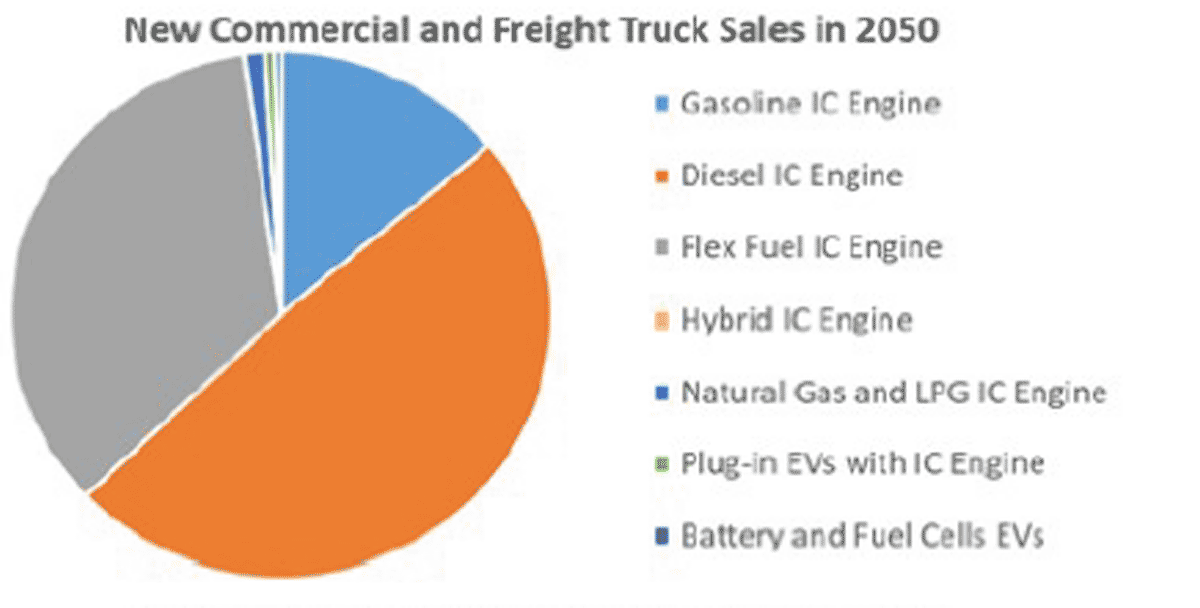
The United States Department of Energy produced a report released early in 2021 describing their analysis on mix of vehicles they anticipate being sold in 2050. Whether or not their numbers are precise, the directional nature of the forecast paints a picture that combustion engines will play an important role for decades to come.

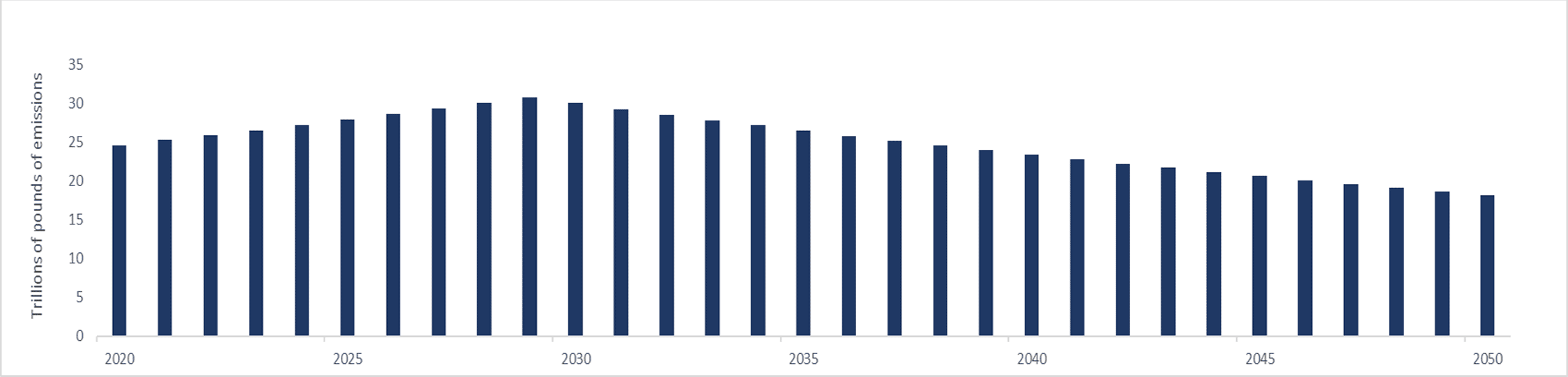
In 2019, the United States transportation sector alone produced 4.1 trillion pounds of CO2 equivalent emissions. The U.S. is only 17% of vehicle traffic in the world. The world produces 24 trillion pounds of emissions, and that number continues to grow. To put the figure into perspective, 24 trillion pounds is equivalent to the weight of all the buildings in New York City 84 times over, or virtually all the buildings in all of the major cities in the world—every year. Considering the continued growth of global transportation emissions, and the development timeline and market penetration rates of clean transportation—which includes current progress toward renewable electricity generation that must be clean to power clean electric—the global transportation emissions footprint will look like this chart below.
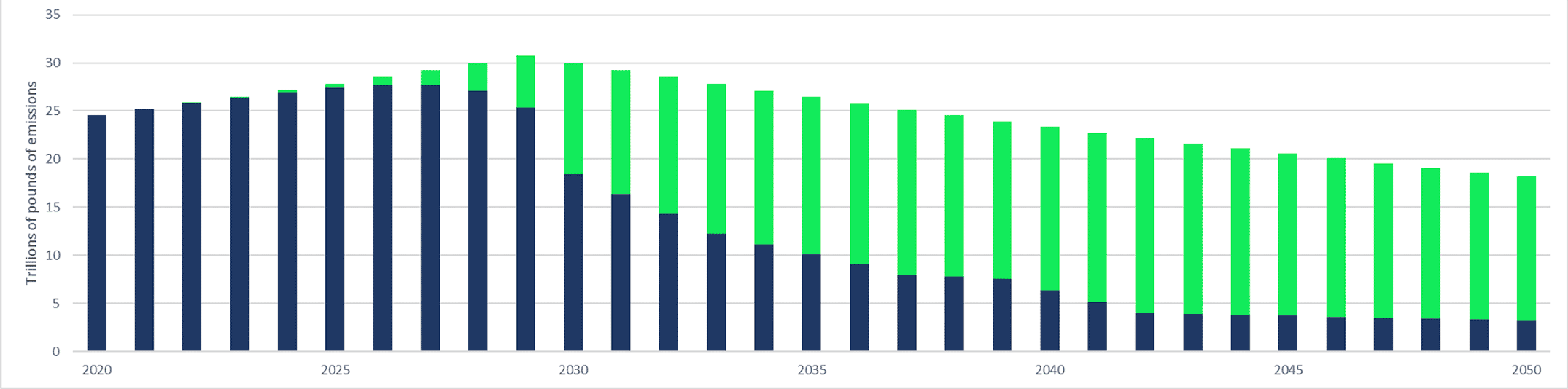
Rivotto Clean Air Technology systems are positioned to prevent up to 160 gigatons (351 trillion pounds) of CO2 equivalent emissions from entering our atmosphere between now and 2050. This figure represents 45% of global transportation emissions between now and 2050. This modeling attempts to properly include clean electric transportation penetration rates, as reflected by the falling blue line. It also factors in accelerating penetration of RCAT systems over the next 10 years, represented by the green portions of the chart.
While venture capital firms invested $43 Billion into clean tech ventures in 2021, little of this money wen to companies focused on making combustion cleaner and more efficient. Further, moving into 2022 the US government has almost entirely stopped funding combustion engine efficiency programs. Despite the lack of funding moving into combustion vehicles, there are still many efficiencies available to find in combustion engines, efficiencies that can make combustion low-emission or nearly clean.
The Department of Energy’s vehicle technology office declared, “One of the most promising and cost-effective approaches to improving fuel economy in the U.S. vehicle fleet is to introduce next-generation of high-efficiency, very low-emission combustion engines that meet future federal emissions regulations into passenger and commercial vehicle markets. Advanced fuel formulations that can incorporate non-petroleum-based blending agents could further enhance engine efficiencies, reduce greenhouse gas emissions, and provide fuel diversification.” US DoE Advanced Engine and Fuel Technologies Program 2020 Annual report, page 18.
The US DoE suggests that up to 35% improvements are possible relative to 2015 baseline engine performance levels. Not only have Rivotto’s Clean Air Technology systems already demonstrated up to 20% improvements to combustion engines, but additional improvements are also possible with RCAT systems.

Eco is already deployed on tens of thousands of combustion engines, making a difference today; EPEC is deployable on engines with mass air flow sensors. To ensure Nx25 and EPEC function on all engines, additional technology optimization is necessary. That being said, RCAT systems don’t rely on high-risk technologies, but rather were developed based on proven scientific principles. Eco, EPEC, and Nx25 are uniformly simple technologies that have scalable supply chains without the complications impacting most industries today. Simply said, Rivotto has technology that is ready to make a difference at mass scale today.
Response:
A review of representative warranties from major truck engine manufacturers shows that installation of after-market accessories such as any Rivotto Clean Air Technology system (RCAT) product does not invalidate such warranties. Base engine warranties are not invalidated unless claimed failures or damages are a result from unauthorized modifications of the engine. Rivotto products are not a modification of the base engine and are not known to cause any adverse effects on engines, and thus do not invalidate base engine warranties. //New Paragraph // OEM engine warranties do not apply to accessories which bear the name brand of another company, and will not warranty any RCAT part or result to the engine determined to be caused by RCAT products. If a user of any RCAT product files a warranty claim with the manufacturer for any covered warranty item on an engine or vehicle manufacturer’s warranty and the manufacturer attempts to deny that claim on account of an RCAT device installed, the terms of warranties available and reviewed by Rivotto provide that the manufacturer would have to prove that the failure or damage was caused by the RCAT product. No RCAT product is known to have ever been a suspected cause of a warranty claim on an engine or emissions system and has never been party to a denied warranty claim. Rivotto does carry product and garage keepers, general, and product liability insurance at a value of up to $1,000,000 combined single limit for the unlikely event that an engine warranty claim could arise and a manufacturer attempt to assign fault to an RCAT product.
Response:
Auto makers have long neglected peripherals to improve engine efficiency and have instead primarily focused their attention on whole engine improvements, stop-start systems, more efficient catalytic converters and other equipment mandated by governments to reduce emissions. Recently, car companies have started to de-emphasize improvements in combustion engines and to prioritize investment into electric vehicles. (GM recently merged their I.C.E. engineering team with their EV team, a clear indication of where the industry is headed.) This doesn’t mean, however, that we’ve reached the end of the road for combustion engines. For example, in 2020 the U.S. the Dept. of Energy estimated that combustion engines could still be made 30% more fuel efficient, and that by 2050 combustion engines would still dominate the road.
Response:
Our technology has never damaged an engine, nor has it ever been cited as a cause for a claim denial for a faulty engine. In fact, our technology can help avoid engine problems. Typically, unburned molecules can remain within the crankcase, building up residue on engine components and contaminating oil. Eco, EPEC, and Nx25 reduce pollutants resulting from combustion, which greatly reduces residue on engine components and contaminant in oil.
Response:
Our ECO has a blanket certification executive order from CARB, D-227-2. Because it is certified by CARB and because the mechanism of function falls outside of tamper or defeat classification, the EPA will not consider it a tamper/defeat device and will not regulate it. Because our EPEC is recently redesigned, it does not yet have a CARB executive order. We plan to file for CARB certifications in May of 2022 and expect the approval to be expedited because our application is based on prior, similar technology exemptions.
Response:
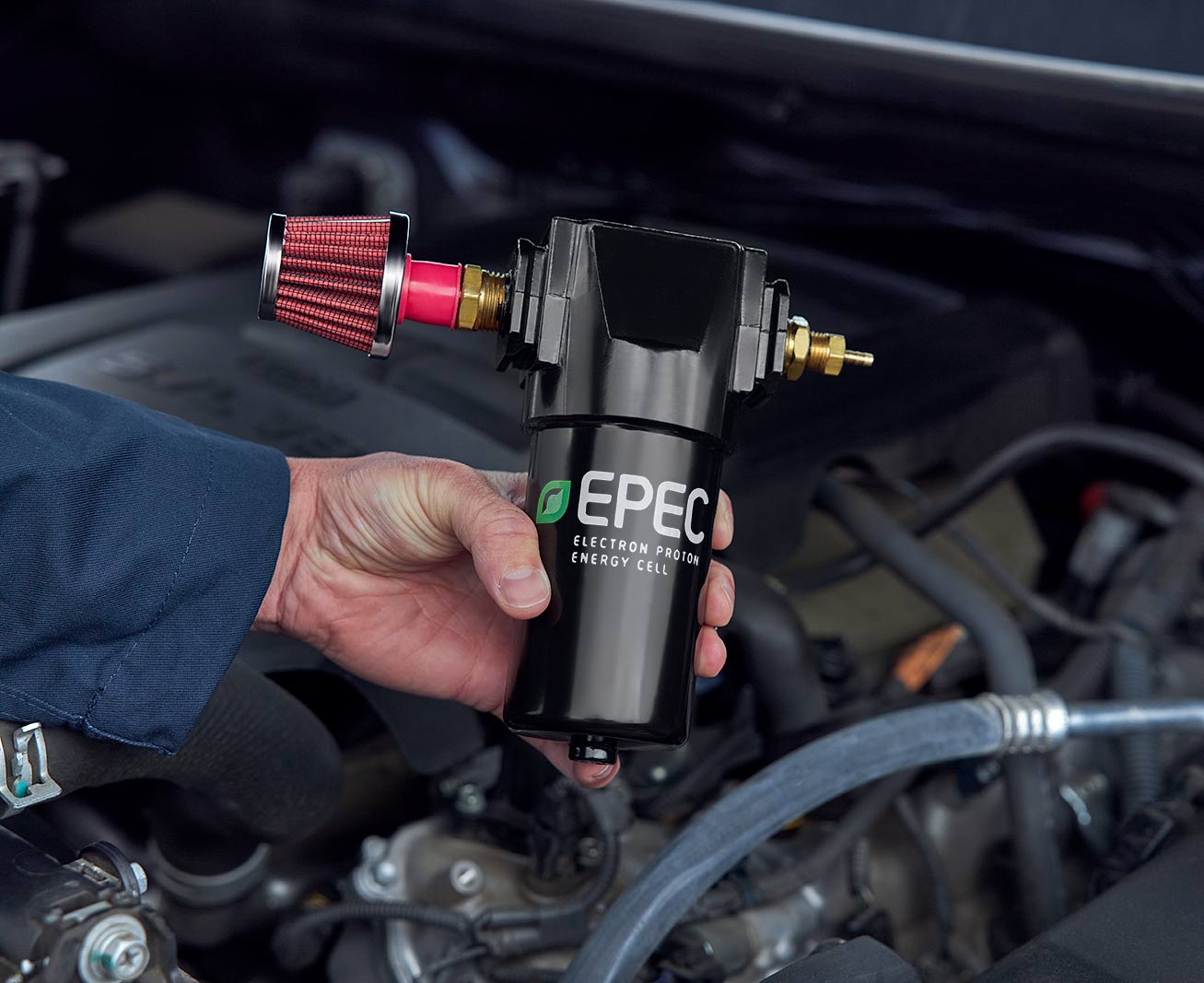
EPEC, the size of a can of soup, is attached within the engine compartment, pulls <10 amps of current, runs the proprietary process and feeds a small-volume of electrostatically charged air into the engine air intake manifold after the mass airflow sensor. The enhanced air mixture dilutes to very small percentages enroute the combustion chamber. No upkeep is required after installation, except for operations in dusty environments where filter changes are necessary. Eco is installed in-line between the last fuel filter and the injection rail, no upkeep is required.
Response:
Eco, EPEC, and Nx25 have all demonstrated consistent reductions in NOx during lab and field testing. NOx forms at elevated combustion temperatures and as combustion temperatures increase so does NOx formation. We have sampled and tested engine cooling effects with the use of Nx25 by sampling engine oil temperatures. With engines operating a in native, unaided state, unburned molecules can remain within the crankcase building up residue on engine components and contaminating oil. Eco, EPEC, and Nx25 reduce pollutants resulting from combustion, which greatly reduces residue on engine components and contaminant in oil. The mechanisms of operation do not embrittle cylinder materials. The engine tends to run more smoothly, especially on diesel applications, which reduces vibration stresses on the engine. Finally, the slightly cooler operating temperatures enabled by RCAT systems results in less friction between internal components.
Response:
With engines operating a in native, unaided state, unburned molecules can remain within the crankcase building up residue on engine components and contaminating oil. The EPEC and Eco-Fuel System both reduce pollutants resulting from combustion, which greatly reduces residue on engine components and contaminant in oil.
Response:
How do you know this is happening?When the fuel flows through the Eco, a chemical change takes place in the fuel. This chemical change, a combination of “breaking” the fuel into smaller molecules and electro statically charging the fuel. This process allows a more complete burn in the combustion chamber. Verified by over 50 field-tested reductions in fuel consumption and emissions.
Response:
To the extent hydrogen is released during the process by modifying hydrocarbon chain format, the hydrogen improves combustion as described for the EPEC. Beyond that residual amount of hydrogen, hydrocarbon molecules, after passing through Eco-Fuel System, are not closely associated, but are more evenly diffused in the air-fuel mix, allowing a more linear combustive process from molecule to molecule.
Response:
Eco, EPEC, and Nx25 improve combustion efficiency and as the efficiency of combustion improves, less fuel is needed for the same power output and so the accelerator is not open as long to achieve desired conditions, reducing fuel consumption. In generators, running at a constant rpm, targeted load levels are achieved with a lower fuel requirement.
Response:
Eco, EPEC, and Nx25 cause the combustion process to produce fewer emissions, including less smoke and particulate on diesel engines. The significantly lower levels of particulate put less stress on DPFs, extend time between regens, and reduce intervals between cleaning the filters. Users will enjoy much higher aftertreatment efficiency when using RCAT systems. The EPEC is currently incompatible with some vehicles that use catalytic converters due to relationship between MAF/MAP and O2 sensors that provides feedback on fuel-air mix based on O2 readings. We are currently developing solutions to overcome this challenge. A simple rule of thumb to use now: When the engine has a mass air flow sensor (MAF), use Nx25 or EPEC. When the engine does not have a MAF, use the Eco.
Response:
In 99.9% of cases, inventors are not businesspersons nor marketers, and neither are businesspersons inventors! This is not a small statement. Lack of business savvy is an obstacle to MANY technologies not successfully getting to market. There are thousands and thousands of unused technologies sitting on the shelves of academic and research institutions and in the personal libraries of inventors. Few innovations become patented, even though they be remarkable and useful. Even among technologies that are patented, according to Forbes, <5% of patents get to market, and then among those 5%, a much smaller number are successful at scale. It takes relationships, business savvy, and capital. Inventors are incredible at inventing, usually not at creating value with their invention. Rivotto is a team of experienced businesspersons who specialize in taking compelling technologies to market.
Response:
The EPEC does not store hydrogen, nor does it require refills of hydrogen to operate.
Response:
Reduced presence of residue and lower cylinder temperatures reduce stress on the engine and extend engine life.
Manufacturers will not invalidate a warranty for the presence of either EPEC or Eco installed on the engine. Manufacturers cannot deny claims for faults that are not associated with Eco / EPEC. If a fault arises with either Eco or EPEC in the loop, the manufacturer would have to prove that the fault was caused by the EPEC or Eco. Neither product has ever caused a claim to arise on an engine or emissions system. On both an absolute and risk adjusted basis, the fuel and emissions savings produced by these systems far outweigh a potential claim assigning fault to these technologies. In the event that such a claim arises, we carry product and garage keepers insurance sufficient to cover damages.
Response:
The driver will not interact with either technology. The technologies are located under the hood and function without operator input.
Response:
The device is low to no maintenance over useful life. Environmental conditions may impact the frequency of air filter maintenance/replacement.
Response:
We are exclusive licensees of EPEC in the United States and Canada, and priority licensee globally. We are assisting the inventor of EPEC in filing for patented protection. We are exclusive licensees of Eco in the United States and work hand-in-hand with the global licensee for international applications. Eco patent number is US 7,942,135 B1. Nx25 is in late-stage development and we protect Nx25 via trade secret.
Response:
We have intentions to test performance of the EPEC product under different environmental conditions, including variable outside air temperatures, humidity conditions, and elevations. We anticipate normal function in a normal range of operating conditions, but do not have sufficient data to postulate about efficacy in extreme operating conditions.
Response:
The device is low to no maintenance over useful life. Environmental conditions may impact the frequency of air filter maintenance/replacement.
Response:
Many aftermarket technologies do incredible things for stock combustion engines. Billions of dollars every year are spent by enthusiasts who improve their vehicles. Some technologies are fraudulent, as is the case in other industries. Eco and EPEC have been reviewed by leading scientists and researchers who have validated first principles of operation. Certified independent laboratories, and extensive field testing, validate that our technologies deliver claimed results.
Response:
Diesel, Gasoline, Natural Gas, and Propane.
Response:
No.
References:
xxxx
DoE VTO report
SwRI employee EV Ted Talk
Elon Musk 2021 Shareholder Meeting
Link to 2016 NREL EV pollution report
Number of vehicles in the world
